Visiting gardens in England 2008 - day 3

  Intro Day 1Day 2Day 3Day 4Day 5Day 6More pictures


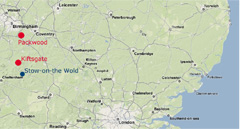
Stow-on-the-Wold - Packwood - Kiftsgate


Packwood House


Day 3 - Wednesday June 4th

The same procedure... started the day with a shopping round at Tesco, few minutes from the hostel by foot. Many of the places we visit does not have a restaurant or tea room, others are very expensive. To bring a lunch is a practical and inexpensive way to keep the spirits up the whole day. A better place for a picknick than an English landscape park is hard to find I'd say!

Packwood House

Designer: John Fetherston, Baron Ash
Style: 17th-century formal, 20th-century informal
Size: 2,8 ha

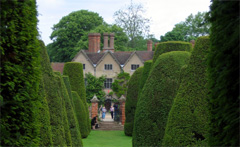
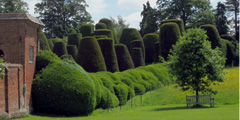
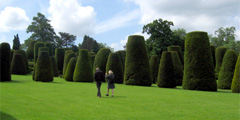
Today's first destination was Packwood House, with its Yew Garden, said to represent the "Sermon on the Mount".  Some trees date back to the 1650s namely "The Master" and "The Apostles". "The Multitude" were planted in the mid-19th century replacing an old orchard.

The Yew Garden is surrounded by box hedges and it takes considerable effort and skill to trim it all. It takes four gardeners two to three months to cut it all, which is done once a year. All the yew cuttings is sent to France where it is used to produce medicine against cancer.


Yew Garden, Packwood House                         


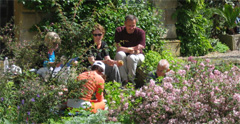
Tea Time, Kiftsgate


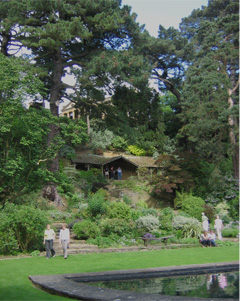
Banks and Lower Garden, Kiftsgate


Kiftsgate Court Gardens

Next stop Kiftsgate Court Gardens, which has its roots in the 1750s. Kiftsgate  got its present form in the 1920s by Heather Muir, grandmother of the present owner Anne Chambers.

Some parts, like the borders and garden rooms, are clearly inspired by Lawrence Johnsons Hidcote Manor which lies only five minutes away.

Kiftsgate is partly situated on a slope, a situation skilfully used, in particular in the area around the Summer House and the lower garden, with its swimmingpool. Beyond the pool there is a 'Ha-Ha', a steep sunken fence against the grazing sheep on the medow below.

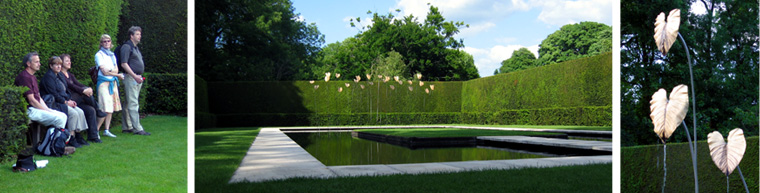
The old tennis court with its surrounding yew hedge was created in the 1930s. Lack of maintenance during the war led to decay. In 1955 the tennis court was overgrown with weeds and small trees. At the end of the 1990s the tennis court was turned into a water garden with a sculpture by Simon Allison.

When we arrived at Kiftsgate some parts of the garden such as the Yellow Border and the Water Garden, were closed to the public due to the heavy rainfall. Shortly before closing time, when almost all visitors except our group left the place, we discovered that the barriers were being removed. This enabled us  to have a closer look at the water garden. Beyond the yew hedges it was calm and quiet. One by one, we found it an almost magical place! After a while we all sat silent by the shallow pond, just enjoying the tranquility.


Water Garden, Kiftsgate


© 2008 Carsten Nilsson